Tuesday, 17 July 2012

Why is Nolan's Batman trilogy important?

I do not want to be Christopher Nolan this week. No way!!  My fragile shoulder would wilt under the impossible, insane, humongous expectations around The Dark Knight Rises (TDKR).
The yearning for the return of the caped crusader started right after the brilliant and cerebral, The Dark Knight. It has been four years (8 years in TDKR) since Batman vanished into the night.


It is probably safe to say that, TDKR, is the most anticipated Hollywood release of the year. Yes, there were The Avengers, then there was Prometheus and then came the spidey reboot. These movies only acted as appetizers to the splendid meal awaiting us.

Whether or not the movie lives up to all possible expectations, Chris Nolan and the movie shall go down in history as one of the most cerebral, celebrated, successful and influential works ever in cinematic history. The trilogy shall be remembered for the technical brilliance, the sheer musical genius of Hans Zimmer, Heath Ledger's immoratalisation (If such a word exists) of Joker the audacity of Nolan is not bowing down to studio pressures and presenting our fav superhero in 2D.

We all know about all this, and appreciate the facts and the trivia, but why I really love this man is because of the way he injected sociopolitical themes with amazing clarity into a superhero movie. While, all the other comic book  superheros dealt with their foes, their struggles were one dimensional. their struggles were limited by the strength (or the lack of it) of the foe. What Nolan bought to the table was refreshing. He did something very special. He seeped in social sentiments like crime, law, pain, fear, oppression, ideals, hope and yearning for an Utopian world into a superhero movie script.
While Batman might fight his battles in Gotham, Nolan showcased the landscape of modern America. It was, as if, he was taking potshots at people in power. He insists that this is a world we live in.It is Nolan's way of asking us to choose between the the man without a face (Bruce) or the symbol of change, Batman. He creates Batman out of anger, the fury of a world gone wrong.

What began as a stark reflection of the times we live in, got reaffirmed in The Dark Knight. Batman believes that Gotham is not the best city to stay in, not the safest place to live in, but has certainly got better. He realizes that this is not only his doing. People who have rallied behind him, against crime are also responsible for the state of the city. Hence, the importance given to Harvey Dent, the white Knight of the city, the crusader without a mask.

Nolan's Gotham is not very different than the Mumbai we live in. we too need the dark and the white knights. We too need to be taken care of. People suffer from pain, anxiety, crime and fear. Ras Al Ghul, Scarecrow, Joker and Bane (TDKR villian) embody the above mentioned plight of our city. Nolan makes us believe that a knight will come, when the night is darkest to lead us to the dawn.


With just 2 days to go for the IMAX premier in India, I can hardly wait to watch the most badass superhero take on his most intimidating enemy. Will he prevail or will he falter and pass on the baton to a younger ideal?? Questions and more questions.
Move on Avengers. Move on Spidey, The Dark Knight is here. And a new dawn for cinema is imminent.
Cannot wait to write the movie review.

Hail Batman, Hail Nolan!!!


Tuesday, 10 July 2012

Jaago re... against shitty cinema.

Ever heard of this guy called Gus Van Sant? Those who have seen the Matt Damon & Robin William starrer, Good Will Hunting, might have. Why did he take 11 long years after 2000, to come out of hiding and make the universally acclaimed film, Milk??
Maybe or  I'm almost sure that he was ashamed to rub shoulders with his Hollywood mates after having made the ultimate mistake of remaking Mr. Alfred Hitchcock's classic, Psycho!! Yes, people make SUCH mistakes in life.

Why am I writing about some obscure Hollywood directer?? Because, our very own Rohit Shetty has committed a similar crime by remaking Hrishida's (Hrishikesh Mukherjee) timeless classic, Golmaal. It is bad enough that he thought of Golmaal as source material, but , it is whole different game to make such a despicable movie and attach Hrishida's name to it.
No, I have not seen the movie,will not watch it, and will try and stop others from watching it. The promos are enough to repel me.
This worrying trend started with the famous Ram Gopal Verma Ki Aag and it was just the tip of the iceberg. Then came Don, then Agnipath. Now we will have remakes, reboots, rehashes, rethinks and re-inventions of Zanzeer, Abhimaan, Aaradhana, Seeta aur Geeta, Chasme badoor.

It is easy to blame a "creative Vacuum" in the Hindi movie Industry, but ultimately it is the demand that shapes the commercial realities. Directors may innovate , but producers need to feel confident that public will welcome and like the product. It is just wishful thinking on my part, because, what I have mentioned above is only about the classics being remade, but, the other worrying, and more irksome trend is remaking  southern movies to make big monies in Bollywood.
Rowdy Rathore might have earned zillions in the box office,but help me find 3 people who have liked it. I do not think many people would like to take up that challenge. 

Okay, I may think that remakes should be banned. Obviously, Mr. Shetty and gang think otherwise. What about origininality, you ask? Well, let me refresh your memory. Take out Kahani, Ek mein aur ek tu, Paan Singh Tomar, Vicky Donner, Shanghai and Gangs of Wasseypur and what do you have? You have had an  absolutely delicious list of movies this year like Ghost (remember the Shiney Ahuja film?), Ek Diwana tha (Yet another south remake), Jodi Breakers (no one saw it) , Agent Vinod (Haha, some spy movie), Housefull 2 (Shut-up), Hate Story ( oh come on), Tezz ( Shit, it gets worse).... Hold on, let me present the big three... PLAYERS ( the godawful attempt at remaking a decent remake of a classic, yess), DEPARTMENT ( Ramu's latest headache - inducing take on the Mumbai underworld) and DANGEROUS ISHQ ( shitty storytelling, 3 times over)...

What is wrong with our industry? Where are we going wrong? where is the problem? Are we, the viewers, responsible? Are we somehow propagating these rank bad movies by paying up upwards of Rs. 200 /- per ticket? As I said, demand fuels everything.... 

I'm sad , very sad, as I write this, but the year ahead does not look bright either.
Just like The Dark Knight rises to save Gotham, we collectively need to rise and stop this phenomenon of propagating mind numbing cinema. Let us boycott movies made in bad taste, movies that are made purely to zillions at the box office, let us stop "keep your brains at home" argument. 
It is your hard earned money. Stop wasting it. If you have to spend 3 hours, get yourself a hobby instead.
We, the multiplex class should bring about this revolution.


Signed,
An angry guy who is disappointed most of the Fridays. 

Sunday, 8 April 2012

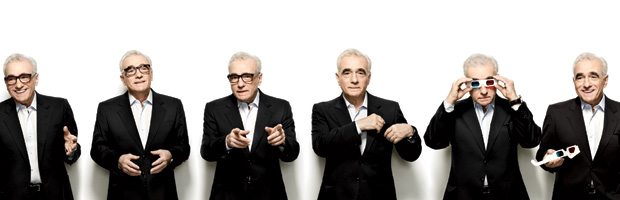
Some know him as God, You may call him Marty


In a world where the superstars or actors pull-in the crowd, how many directors manage to do the same?  How many directors command a bigger pedestal than the cast of the movie? Not many, I guess.

During the Academy awards, one name was invoked more often than anybody else’s name. Martin Scorsese.
After giving us 22 movies, 13 documentaries, many commercials and  just 1 Oscar, the 70 year old Marty, as he is fondly called, gave us HUGO.
Whether it is gritty and violent like MEAN STREETS, TAXI DRIVER or poignantly romantic like ALICE DOESN’T LIVE HERE ANYMORE, or satirical like THE KING OF COMEDY, AFTER HOURS or just plain stylish like AVIATOR, GOODFELLAS, Marty‘s uniquely versatile vision has made him one of cinema’s most acclaimed directors.

As a young kid, bought up in the little Italy section of Manhattan, he decided to “Make movies about what really happens”. In hindsight, you will know that Marty does not only make movies, but also is a great movie fan with a insatiable appetite to watch, discuss and enjoy cinema. His inspiration for making movies can from came from his own childhood spent in the Bronx. By his own admission, he said that the biggest research he did for making Mean Streets, his first major release, was his life. He would watch people in the gritty neighborhood go about their life and business and just poured his experiences in the movies that have made him the man he is today.

40 years after he made his first major Hollywood movie, his balance sheet looks balanced. He is one of the few directors today who have received both critical and box office acclaim. Of course, like anybody, he did go through a lean patch in the late 70s and early 80s when none of the studios supported him after box office disasters like New York, New York and The King of comedy. His professional life dipped further when studios did not accept The last temptation of Christ, as it was deemed too radical.  All the while, he lived in Los Angeles, he learnt the mechanics of how large cities function. It was this knowledge that he put to use to bounce back. He moved back to New York to set his professional career on track.

The second part of his career is the part where-in he came into his own. He belted out movies like The last temptation of the Christ (he made Universal studios to produce the movie), Raging Bull, Goodfellas, Cape Fear, Casino and Kundan before ending the millennium on a high. Post 2000, having juiced DeNiro with some fine performances his association with Leonardo Dicaprio began. The noughties saw Scorsese shed his Mafia fixation and dabble into big budget set piece movies. Scorsese and Dicaprio would collaborate to give us movies like Gangs of New York (a script that he had been wanting to make for 20 years, with DeNiro in the lead), Aviator, Departed (the movie that won him the most coveted Oscar, finally), and finally Shutter Island.


While all of us love the overall feel of his films, he should be credited for all the factors and innovations that he bought to cinema.
 Known as the “king of tracking shot”, he is known for his lengthy takes. Most of his movies start and end with 2-3 minute scenes, which is a mean feet.  Other contributions like bring the “New York vernacular” talk in movies like Mean Street, Goodfellas, color treatment in movies like Aviator, Gangs of New York, and now re-interpretation of how 3D can bolster a film’s beauty without intruding on the story  only add to his folklore.
Having been fed on movies by Howard Hawks, Billy Wilder, Sidney Lumet, he was adamant about learning from them and developing his own unique style of film making. He was mainly influenced by these greats, because, they did not bend down in front of the Hollywood studio system and got their creative vision on screen.

When not giving in to the big studios or simply battling it out with them, he vented out his creative genius into making documentaries , music videos (the Rolling Stones concert and Micheal Jackson shows were legendry)  and restoration of old-movies.

His style of movie-making combined a rough and gritty attention to the everyday life of the urban jungle with a monumental visual sensibility. In one of his most acclaimed films, Taxi Driver 91976), he focused on the particulars of an individual and his obsessions. Starring Robert DeNiro (with whom Scorsese has had one of the most celebrated collaborative relationships in American cinema), Taxi Driver elevates the obscure specifics of a disturbed life with greatest drama.
Through movies like Mean Streets, Goodfellas, Casino, Departed, he has shown us the engaging world and power structure of Mafia. He bought together and style and theoretical content with great flair. Scorsese often focused on a theme that has permeated nearly everyone of his movies – the plight of the desperate and out-of-control individual. Often unsympathetic, his characters display a crazed violence that mimics the repressive social structures in which they live. Almost all his movies are engaging and social commentaries.

Martin Scorsese is the most important living American filmmaker – one whose relentless search for the furthest emotional reaches of his genre have led him to the center of the American ( and global) psyche.
In an era where careers are measured in months rather than years, Marty has served us for close to 45 years. In Hollywood, that is no lesser than a battlefield, he has battled it out with studios, stars and himself.
But all this has not resulted in a burn-out. At the age of 68, he set out to make a 3D movie. For a man who has always believed in old-school film making, and who has never tasted massive box office success (his most successful film was Shutter Island, that grossed $ 300 million worldwide), he adapted to the rigors of a new technique of film making. He has achieved three things that very, very few filmmakers achieve in life – (1) Enough money to make movies and documentaries that interest him, (2) enough freedom to make the movies in the way he wants to make them, (3) Enough acclaim and appreciation (not in the way of awards , though) from his peers and fans.
His lack of recognition from the Academy awards actually adds to rather than detracts from his reputation: after all, Orson Welles, Alfred Hitchcock and Stanley Cubrick were also all denied Oscars.

Just like a 3 minute show reel of a lifetime’s work cannot do justice to a man or his body of work, this is just a sincerely written piece of tribute to a man who has worked his lifetime to entertain us. I raise a toast to Marty, the movie fan, who also makes movies. 


( This post was first published on www.madaboutmoviez.com - http://tinyurl.com/brhcxov )